
Introduction: The Growing Need for Lithium Recycling
As the world races toward electrification, lithium has emerged as a cornerstone of clean energy technologies, powering electric vehicles (EVs), smartphones, grid storage, and more. But as demand for lithium surges, so does the urgency to recycle lithium from end-of-life batteries and industrial waste.
Mining new lithium is costly, environmentally taxing, and geographically constrained. To build a sustainable lithium supply chain, we must look to recycling, not as a backup, but as a primary strategy according to the International Energy Agency Global EV Outlook 2023.
The Challenge: Extracting Lithium from Black Mass
When lithium-ion batteries are decommissioned, they’re shredded into a residual mixture called black mass, a powdery blend containing valuable metals like lithium, cobalt, nickel, copper, and manganese. While it holds promise, extracting lithium from black mass isn’t easy.
Why is this a challenge?
- The composition is chemically complex.
- Lithium exists in small quantities relative to other metals.
- Extraction usually requires highly acidic or highly alkaline environments.
- Most ion-exchange technologies either break down under these conditions or extract multiple metals instead of just lithium.
The result? Time-consuming, inefficient, and costly recovery processes (source : MDPI study on lithium extraction, Ajiboye & Dzwiniel, 2023).
With battery manufacturers and recyclers under pressure to scale operations, the industry needs a faster, cleaner, and more selective solution.
The Solution: Saint-Gobain’s Spira™ Ion-Exchange Media
At Saint-Gobain Lithium Solutions, we offer a cutting-edge approach: a proprietary lithium-extractive media technology using an ion-exchange mechanism.
Unlike conventional resins that lose effectiveness in harsh chemical environments, our Spira™ media is engineered to:
- Target lithium ions specifically, even in complex solutions.
- Remain stable in low-pH or high-pH conditions.
- Deliver high cation selectivity, meaning it prioritizes lithium over competing metals like nickel or copper.
- Retain mechanical integrity across multiple extraction cycles.
- Work with multiple acid systems, including hydrochloric, nitric, and sulfuric acid.
Think of it like a precision filter, one that’s tough enough to survive extreme conditions and selective enough to pick out lithium from a sea of metals.
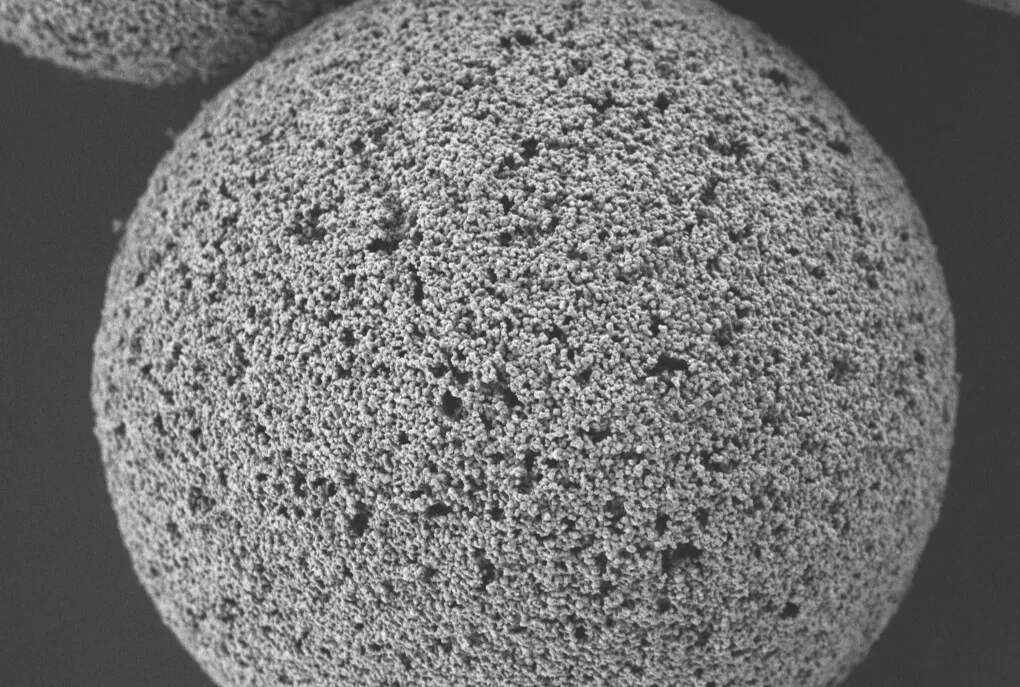
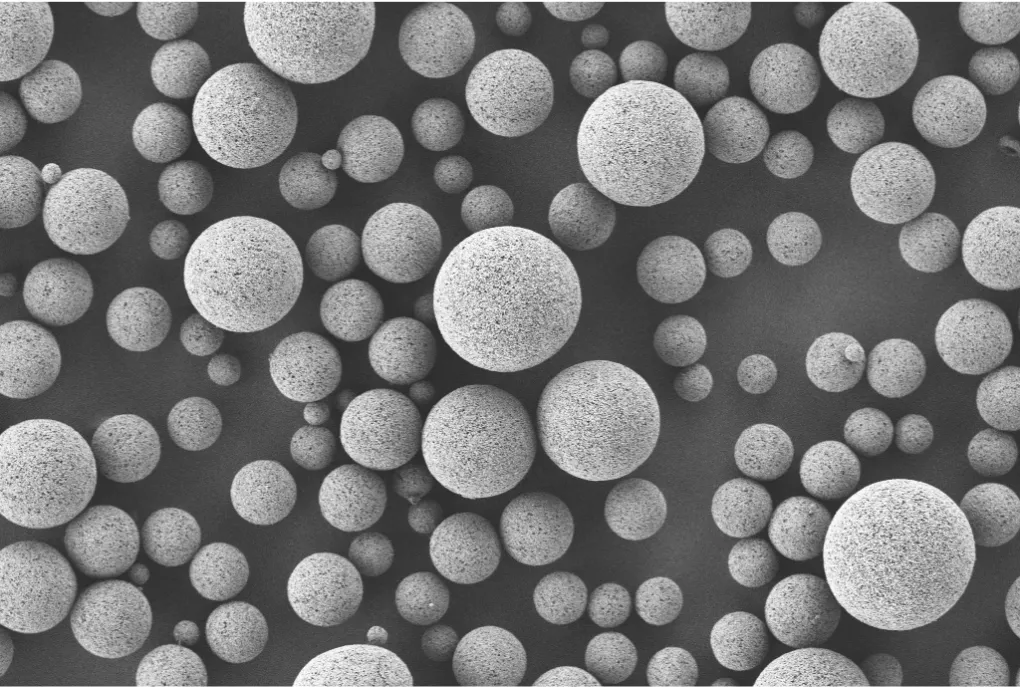
Figure 1: Saint-Gobain's Spira™ media at two magnifications under scanning electron microscope.
Why Spira™ Outperforms Traditional Methods
Here’s how our solution stands out:
| Feature | Conventional Ion-Exchange | Saint-Gobain Spira™ Media |
| Selectivity | Limited: often captures multiple | High: targets lithium specifically |
| Chemical Compatibility | Sensitive to pH | Effective across low and high pH ranges |
| Mechanical Strength | Often degrades | Robust and reusable |
| Speed of Extraction | Slower due to interference | Faster recovery times |
| Versatility | Single-environment usage | Compatible with various acid systems |
Using Spira™ instead of conventional sorbents or other ion-exchange technology can lead to benefits such as higher lithium yields, shorter processing times, and reduced costs, without compromising material quality or environmental safety.
Toward a Sustainable Lithium Future
At Saint-Gobain, we’re not just supporting the circular economy, we’re engineering it.
Our ion-exchange media technology is designed for real-world recycling operations where selectivity, speed, and stability make all the difference. Whether you're handling black mass, lithium-containing scraps, or complex hydrometallurgical streams, our solution helps you recover lithium efficiently and sustainably.
Let’s Work Together
If you're in the battery manufacturing, recycling, or material recovery industry and are exploring next-generation lithium extraction, we’re here to help.
Contact us today to learn how Saint-Gobain’s Spira™ ion-exchange media can accelerate your recycling strategy.
References
1. International Energy Agency. (2023). Global EV Outlook 2023: Trends and developments in electric vehicle markets. Retrieved from https://www.iea.org/reports/global-ev-outlook-2023
2. Ajiboye, A. E., & Dzwiniel, T. L. (2023). Sequential recovery of critical metals from leached liquor of processed spent lithium ion batteries. Batteries, 9(11), 549. Available here: https://www.mdpi.com/2313-0105/9/11/549